Insights
- Private Sector - undefined
Fractional Revolution: from financial to wealth inclusion
25 September 2026
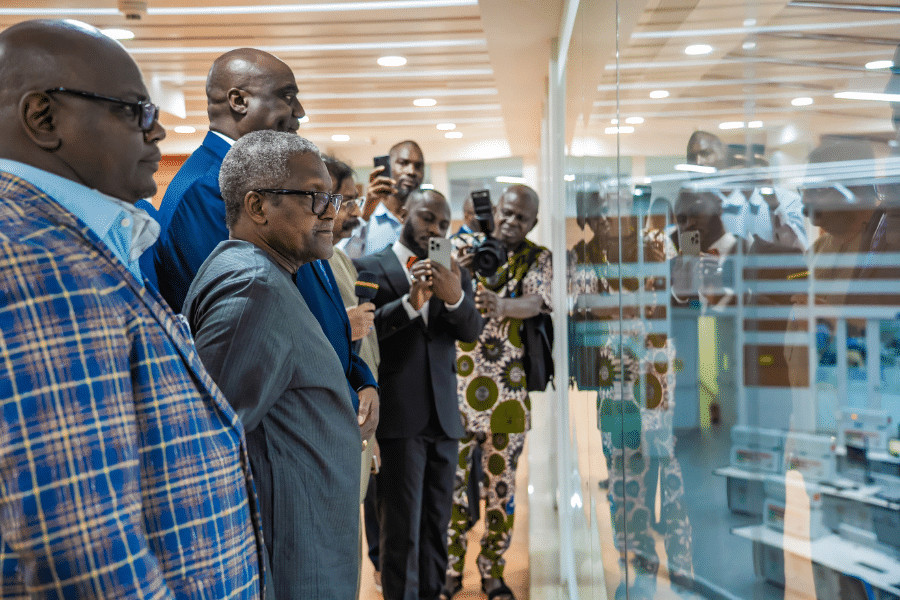
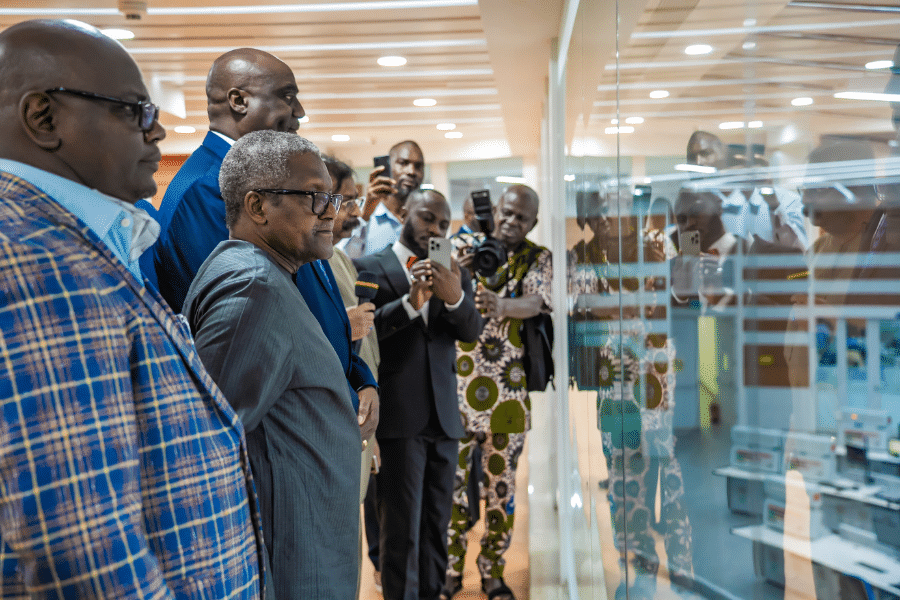
Aliko Dangote caused something of a stir recently when he explained why he wants ordinary Nigerians to build wealth by participating in the initial public offering (IPO) of the Dangote Petroleum Refinery.
“The IPO we are doing is not that we want to raise money,” he said in an interview. “It is purely we want the poor people, people like my driver, my cook, your driver, your cook, yourself, your wife, your kids to have a piece of the action.” Check out the interview with Al Jazeera on YouTube (Time stamp: 11:10)
It was perhaps not the most elegant way to describe wealth inclusion.
But look beyond the phrasing and there is a powerful idea.
Dangote is talking about democratising ownership.
The Dangote Refinery IPO opened with shares priced at ₦525 and a minimum subscription of just 10 shares — ₦5,250, or roughly US$4. The shares are available through approved Commercial Banks such as FirstBank of Nigeria, fintechs and others. Dangote has spoken about ultimately attracting around 10 million shareholders, including drivers, cooks and market women.
His argument is essentially this: why should ownership of Africa's biggest businesses be confined to billionaires, institutional investors, pension funds and the wealthy?
Why shouldn't the people who buy their products, work in their businesses and live in the economies they transform own a small piece of them too?

This is not philanthropy.
It is capitalism with a much lower entry ticket.
And it reminded me of something I saw seven years ago in Singapore.
The lesson I took from Ping An's wealth tech app
In 2019, I attended the Singapore FinTech Festival while working in Singapore. One of the companies that completely blew me away was Ping An.
What struck me was not simply their proprietary technology. It was the ecosystem they were building around financial services and the sheer scale at which technology could bring financial products to ordinary consumers.
Ping An launched their wealth management fintech platform, LU Global, in 2017 with the goal to become one of the world's leading online wealth-management and retail-lending platforms. It now has over 400k registered users. Wealth products were being offered for as little as $5,000. Ping An is simultaneously using technology across banking, insurance, lending, wealth management and healthcare.
Walking around their exhibition, my takeaway was simple: wealth management did not have to begin when somebody became wealthy.
It could begin with the first small amount they were able to save.
That idea stayed with me.
And this week, it came back.
What if £1 is enough?
I received an email from my broker, IG, this week announcing fractional investing.
You can now invest from £1 in fractional shares of companies such as Tesla, Nvidia and Apple, with more than 10,000 stocks (LSE, NYSE and NASDAQ) available through the service.
Think about what has happened to the psychology of investing.
Historically, the question might have been:
“Can I afford a share in this company?”
Fractional investing changes the question to:
“How much can I afford to invest today?”
That is a profound difference.
If you have £10, you do not need to wait until you have enough money to buy an entire share. You can invest £10.
Next month, perhaps you invest another £10.
Instead of investing being an activity you postpone until you have accumulated wealth, investing itself becomes one of the mechanisms through which you accumulate wealth.
Africa is already seeing this model emerge. In Nigeria, Ghana and South Africa, for example, Bamboo allows customers to fund an account from as little as $1 and buy fractional US shares from around $2.
That matters enormously in markets where disposable incomes may be low but mobile penetration and appetite for digital financial services are high.
From fractional shares to fractional wealth
This opportunity goes much further than equities.
Look at gold.
For centuries, gold has been a traditional store of wealth across Africa, the Middle East and Asia. But traditionally, buying investment-grade gold required a meaningful lump sum, somewhere safe to store it and access to a reputable dealer.
Digitisation is dismantling those barriers.
In the UAE, some platforms allow customers to buy 24-karat digital gold from just AED10. The gold is physically backed and customers can accumulate their holdings digitally and eventually redeem them for physical gold.
Other platforms are following the same principle. botim introduced fractional gold and subsequently digital silver investing, while other UAE providers offer fractional precious-metal ownership at similarly low entry points.
The underlying principle is the same whether the asset is Tesla, the Dangote Refinery or a gram of gold:
Take an asset that historically felt inaccessible, divide access into affordable units, put it on a phone and make participation almost frictionless.
That is the fractional model.
And I believe it has enormous potential across Africa and the Middle East.

The gamification of wealth — in a good way
There is another dimension to this: behavioural economics.
Financial services are beginning to borrow some of the mechanics that made social media, gaming and e-commerce extraordinarily engaging.
Small actions. Instant feedback. Progress bars. Notifications. Targets. Streaks. Visual portfolios. Automatic contributions.
There are obvious dangers. Investing should not become a casino. The same design techniques that encourage someone to save AED10 every day can encourage excessive trading, speculation and financial behaviour that people do not fully understand.
Consumer protection and financial education therefore have to evolve alongside product innovation.
But gamification does not inherently have to mean speculation.
Imagine opening your banking app and seeing:
You own 0.004% of a gram of gold.
Next week you own a little more.
Your goal is one gram.
Then five.
Or imagine automatically investing the equivalent of a cup of coffee every week into a diversified portfolio.
Or allowing someone earning a modest salary in Lagos, Lusaka, Nairobi, Accra, Dubai or Riyadh to set aside a tiny percentage of every salary payment into investments before they have the opportunity to spend it.
The objective is not to make investing feel like gambling.
It is to make wealth accumulation habitual.
That distinction matters.
Africa needs investors, not just bank-account holders
This could be particularly important for Africa.
Much of the financial-inclusion conversation over the past two decades has focused on access to banking, payments, mobile money and credit.
Those achievements are important.
But the next phase should be about financial participation and asset ownership.
Africa has only 1,141 listed companies out of roughly 54,000 globally, and African companies have accounted for only around 1% of global equity capital raised since 2000. Many African markets continue to suffer from shallow domestic investor bases and limited liquidity.
Yet retail investors are an important source of domestic savings, liquidity and capital-market development — particularly when digital platforms reduce the barriers to participation.
This is what makes the Dangote IPO so interesting.
It is not merely about whether Dangote Petroleum Refinery is a good investment at its IPO valuation. Investors need to make that assessment for themselves.
The bigger question is what happens when millions of Africans begin to think of themselves as owners of productive assets rather than simply consumers of them.
Nigeria has more than 200 million people.
What happens if 10 million of them own shares?
What happens when the next major African telecommunications company, bank, energy company or infrastructure project deliberately designs an offering for one million small investors rather than a few hundred large ones?
That begins to change the relationship between citizens, savings, companies and capital markets.
Banks should pay attention
This is also why I believe established financial institutions have an enormous opportunity.
Fintechs may develop some of the technology, but banks already possess several things that are difficult to replicate: customers, trust, regulatory infrastructure, KYC information, payments infrastructure, custody relationships and enormous distribution networks.
The question is whether they use those advantages merely to distribute traditional products digitally — or to redesign the products themselves.
A savings account is useful.
But what if the same customer could allocate AED10 or $2 at a time between cash, gold, equities, bonds and other appropriately regulated investment products?
What if salary payments automatically triggered micro-investments?
What if remittance apps allowed diaspora customers to send $200 home and simultaneously put $5 into an investment account for the recipient?
What if banks across Africa used the same mobile infrastructure that revolutionised payments to revolutionise ownership?
This is where banking, wealth management, capital markets and fintech begin to converge.
From financial inclusion to wealth inclusion
For years, we have celebrated the democratisation of payments.
Perhaps the next frontier is the democratisation of assets.
The technology already exists.
The cost of distribution has collapsed. Smartphones have become bank branches. Digital KYC has reduced onboarding friction. Fractionalisation has dramatically lowered minimum investment sizes. APIs allow banks and fintechs to embed investment products into platforms people already use every day.
The opportunity now is to connect these pieces.
The winner may not be the institution with the most sophisticated private bank.
It may be the institution that understands that tomorrow's wealthy customer could start today with AED10, ₦5,000 or £1.
Ping An helped me see that possibility in Singapore in 2019.
IG reminded me of it this week.
And, whether he articulated it perfectly or not, Aliko Dangote is making essentially the same argument in Nigeria today.
Give ordinary people a piece of the action.
Because perhaps the future of wealth management is not simply managing wealth after it has been created.
It is giving millions more people the tools to start creating it.
Where ONGOLO comes in
For financial institutions across Africa and the Middle East, the fractional economy creates opportunities across retail banking, wealth management, digital savings, precious metals, capital markets and cross-border investment.
But success requires more than launching another app. Institutions need to think about product design, customer segmentation, partnerships, regulation, technology, financial education and — critically — how small transactions can become long-term customer relationships.
ONGOLO Advisory works at the intersection of Africa and the Gulf, helping financial institutions and businesses identify opportunities, build partnerships and translate market shifts into practical growth strategies.
The fractional revolution is already underway.
The question for banks, investment firms and other financial institutions is no longer whether customers with modest amounts of money want to build wealth.
It is whether we are designing financial products that allow them to do so.
Related insights

- Private Sector - Financial Services