Insights
- Public Sector - Policy Development
Africa: The Last Frontier for Human Capital
27 May 2026
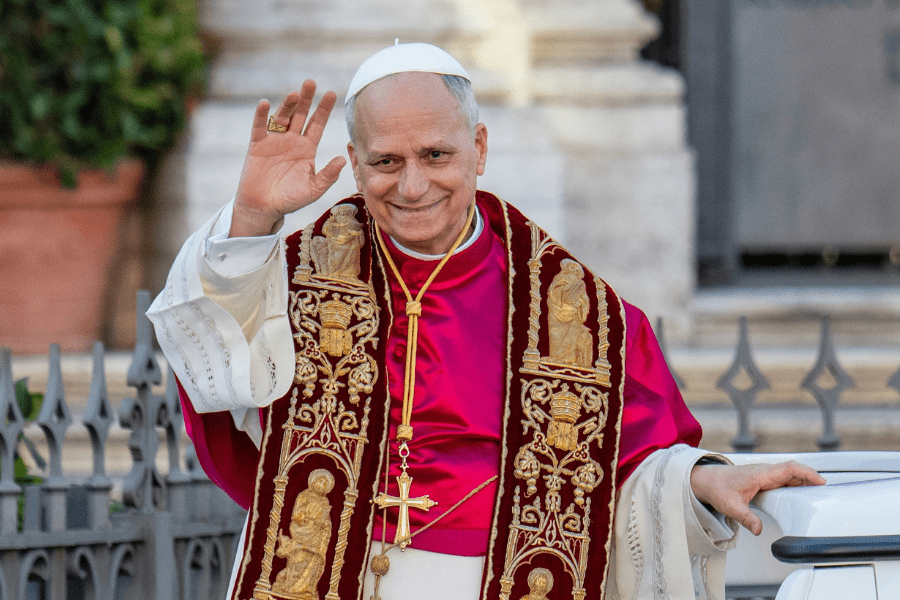
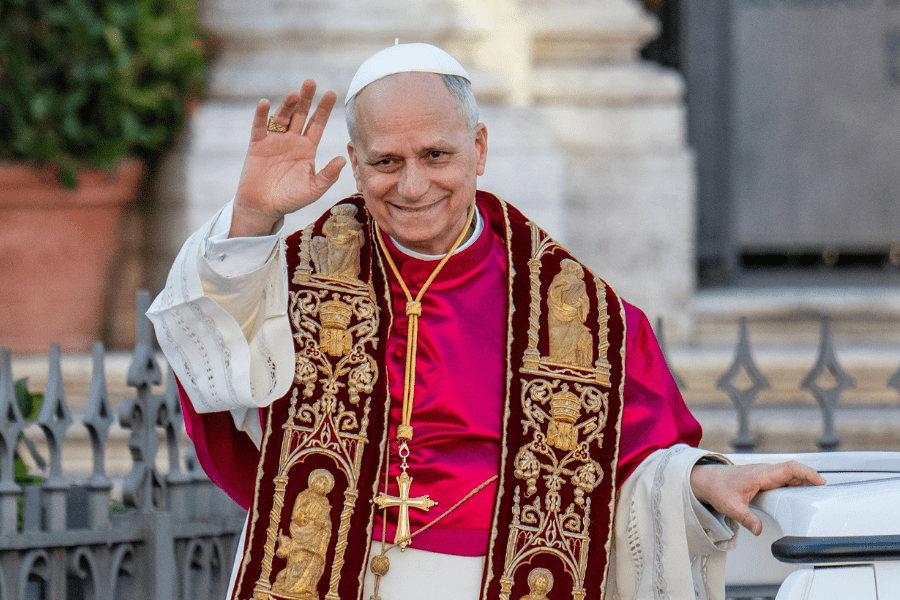
When Pope Leo XIV released his encyclical on artificial intelligence, the world expected another predictable debate about technology: innovation versus regulation, human productivity versus jobs, progress versus fear.
Instead, he asked a deeper question.
What happens to society when efficiency becomes more important than human beings?
Human dignity
The Pope’s concern was not really about robots. It was about dignity. About whether humanity is slowly building an economic system where people are no longer necessary — merely expensive.
The timing is fascinating because, for years, Africa has been criticised for exactly the opposite problem.
Too many people involved in processes.
Too much bureaucracy.
Too relationship-driven.
Too analogue.
Too slow to automate.
Too dependent on labour rather than systems.
Africa's human-centred capitalism
And yet, in the age of AI, Africa suddenly looks less like a laggard and more like the world’s final reserve of human-centred capitalism.
The developed world spent the past three decades optimising everything for speed and efficiency. Self-checkouts replaced cashiers. Apps replaced bank tellers. Algorithms replaced travel agents. Entire companies now proudly announce layoffs as evidence of “digital transformation.”
Meanwhile, Africa stubbornly refused to fully cooperate.
To open a bank account, someone still wants to see you physically.
A document still needs three stamps, two signatures, and a photocopy of your passport.
Business meetings begin with twenty minutes of asking about your family before discussing contracts.
Government offices still require human interaction, patience, and occasionally divine intervention.
For years, economists called this inefficiency.
Pope Leo might call it civilisation.
AI must assist humanity rather than replace it
One of the most striking themes in the encyclical is the warning that societies risk becoming dehumanised when technology removes relationships, judgment, and moral responsibility from everyday life. AI, he argues, must assist humanity rather than replace it.
Africa, almost accidentally, may already understand this instinctively.
Because despite all the frustrations of doing business on the continent, Africa still fundamentally believes that people matter.
An African bank branch may be slower than a sleek neobank app in London or Dubai. But when systems fail — and systems always fail eventually — there is usually still a human being somewhere who can solve the problem. Someone who knows someone. Someone who can override the process. Someone who can say, “Come back tomorrow, we will sort it out.”
Entire economies still run on relationships, trust networks, family structures, and social obligations.
Catastrophically inefficient.
Profoundly human.
Ask the right questions
The Pope also warns about the concentration of technological power into the hands of a few corporations and governments. That concern feels particularly relevant for Africa.
The continent has largely consumed technology built elsewhere, under rules defined elsewhere, with values determined elsewhere. Africa’s slower adoption of AI may not only be about infrastructure gaps or capital shortages. It may also be an opportunity to ask better questions before fully surrendering to automation.
Not every school needs AI-generated homework.
Not every church needs AI sermons.
Not every hospital needs to replace nurses with chatbots.
And perhaps not every company should fire half its workforce simply because Silicon Valley says that is the future.
Labour laws are protecting people
For decades, multinational companies complained that African labour laws were too rigid and worker protections too political. African governments were told they needed “flexibility,” usually as a polite way of saying companies wanted to hire and fire people more easily.
Now many of those same advanced economies are panicking about what happens when millions of white-collar workers become economically irrelevant.
Africa, meanwhile, may unintentionally become one of the last defenders of the radical idea that people should still have jobs.
This does not mean Africa should reject technology. The continent desperately needs digitisation, productivity gains, better infrastructure, modern healthcare systems, and globally competitive industries. Romanticising inefficiency is not development policy.
But Pope Leo’s encyclical raises an uncomfortable possibility: perhaps the countries that preserved space for human interaction, community, and labour will ultimately prove more socially resilient than those that optimised purely for efficiency.
Technology cannot substitute human interactions
There is also something deeply African about scepticism toward replacing people with machines.
African societies remain unusually communal. People still gather physically. Families remain deeply intertwined. Elders still matter. Weddings have 700 guests. Funerals become national events. WhatsApp voice notes somehow last six minutes when thirty seconds would have sufficed.
The continent has not fully surrendered to hyper-individualism yet.
And that may matter more than anyone realises.
The West increasingly speaks about “human-centred AI” because humans have already disappeared from many aspects of public life. Africa may not need to rediscover humanity because, frankly, it never industrialised enough to lose it in the first place.
Perhaps that is Africa’s strange advantage in the AI age.
Final word
The future may not belong exclusively to the societies with the fastest algorithms and the fewest employees. It may also belong to societies that still understand something older and harder to automate: trust, relationships, meaning, community, and the dignity of human work.
For once, Africa’s refusal to move at the speed of Silicon Valley may not be a weakness.
It may be wisdom.
ONGOLO Inc FZE supports clients with policy development. Read more about our Services or email us at hello@ongolo.com